
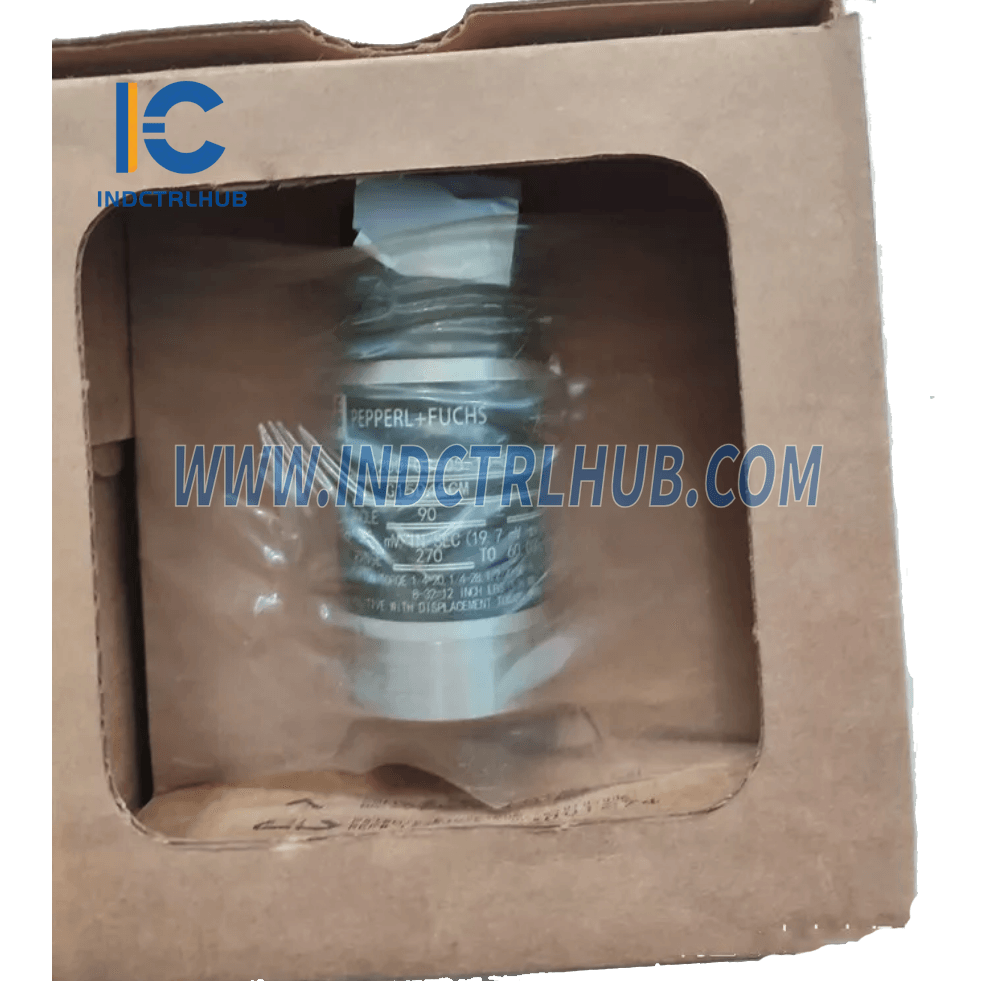
Bently Nevada 9200-03-05-10-00 Two-Wire Velocity Transducer
Bently Nevada 9200-03-05-10-00 Two-Wire Velocity Transducer
Manufacturer: Bently Nevada
Product No.: 9200-03-05-10-00
Condition:1000 in stock
Product Type: Velocity Transducer
Product Origin: 8509200030510
Payment: T/T, Western Union
Weight: 300g
Shipping port: Xiamen
Warranty: 12 months
- 24/7 Support
- 30-Day Returns
- Fast Shipping
Bently Nevada 9200-03-05-10-00 Two-Wire Velocity Transducer
The Bently Nevada 9200-03-05-10-00 is a rugged two-wire velocity transducer from the renowned 9200 Seismoprobe series, engineered to deliver precise vibration measurements in the harshest industrial environments. This self-generating sensor converts mechanical vibration into proportional electrical signals without requiring external power, making it ideal for continuous machinery health monitoring across diverse applications.
Core Technical Specifications
- Model Number: 9200-03-05-10-00
- Sensitivity: 100 mV/mm/s (nominal at 100 Hz)
- Frequency Response: 10 Hz to 1000 Hz (±3 dB)
- Measurement Range: 0 to 50 mm/s peak velocity
- Transduction Principle: Moving coil electromagnetic design
- Operating Temperature: -40°C to +121°C (-40°F to +250°F)
- Environmental Protection: IP67 (dust-tight and waterproof)
- Mounting Thread: 5/8-18 UNF-2A
- Electrical Connection: Integral 2-meter cable with flying leads
- Housing Material: Stainless steel 316L for corrosion resistance
- Weight: Approximately 300 grams
Self-Generating Technology Advantages
Unlike accelerometer-based systems requiring external power and signal conditioning, the 9200-03-05-10-00 employs a passive moving-coil design that offers distinct operational benefits:
- Intrinsic Reliability: No active electronics to fail; the sensor generates its own signal through electromagnetic induction, eliminating power supply dependencies
- Simplified Installation: Two-wire configuration reduces wiring complexity and installation costs by up to 40% compared to powered sensors
- Hazardous Area Suitability: Passive design inherently safe for explosive atmospheres without requiring barriers or isolators
- Long-Term Stability: Minimal drift over decades of operation; field-proven reliability exceeding 20 years in continuous service
- Direct Velocity Output: Measures velocity directly without mathematical integration, providing the most relevant parameter for machinery condition assessment
Industrial Application Scenarios
The 9200-03-05-10-00 velocity transducer excels in monitoring critical rotating and reciprocating machinery:
Power Generation Facilities
- Steam Turbines: Bearing housing monitoring on high-pressure and low-pressure sections, detecting bearing wear, unbalance, and misalignment before catastrophic failure
- Generators: Stator frame vibration monitoring to identify electromagnetic issues, rotor eccentricity, and foundation problems
- Boiler Feed Pumps: Multi-stage pump monitoring where cavitation, impeller damage, and seal failures manifest as velocity changes
Oil & Gas Processing
- Centrifugal Compressors: Casing vibration surveillance in gas compression trains, critical for preventing unplanned shutdowns costing millions per incident
- Reciprocating Compressors: Crosshead and frame monitoring where high-amplitude low-frequency vibrations indicate mechanical looseness or valve failures
- Pipeline Pumps: Remote monitoring installations where sensor reliability and low maintenance are paramount
Manufacturing & Process Industries
- Paper Mills: Dryer section rolls, calendar stacks, and winder drives operating in high-temperature, high-humidity environments
- Steel Mills: Rolling mill stands, cooling bed conveyors, and material handling systems exposed to extreme temperatures and contamination
- Chemical Plants: Agitators, mixers, and reactor circulation pumps handling corrosive fluids requiring IP67 environmental protection
Condition Monitoring Integration
The 9200-03-05-10-00 integrates seamlessly with comprehensive vibration monitoring architectures:
- Bently Nevada 3500 Systems: Direct connection to 3500/42M and 3500/55 velocity monitor modules for continuous online protection
- Portable Data Collectors: Compatible with handheld analyzers for periodic route-based monitoring programs
- PLC/DCS Integration: Output signal interfaces with standard 4-20 mA converters for integration into plant control systems
- Wireless Transmitters: Pairs with wireless vibration transmitters for retrofit applications where cabling is cost-prohibitive
Installation Guidelines & Best Practices
Proper installation is critical to measurement accuracy and sensor longevity:
Mounting Considerations
- Location Selection: Mount on bearing housings or structural points with direct mechanical coupling to vibration source; avoid flexible mounting surfaces
- Orientation: Install with sensing axis perpendicular to shaft centerline for radial measurements; axial mounting detects thrust bearing conditions
- Surface Preparation: Machine flat mounting surface with maximum 63 microinch finish; remove paint, rust, and contaminants within 25mm radius
- Torque Specification: Tighten to 20-25 Nm (15-18 ft-lbs) using calibrated torque wrench; over-torquing damages internal components
Cable Routing & Termination
- EMI Protection: Route cables in grounded metal conduit; maintain 300mm minimum separation from AC power cables and VFD wiring
- Strain Relief: Secure cable within 150mm of sensor using cable clamps; prevent tension on integral cable connection
- Termination: Use shielded twisted-pair extension cables; connect shield to ground at monitoring system end only to prevent ground loops
- Testing: Verify coil resistance (typically 500-700 Ω) and insulation resistance (>100 MΩ to ground) before commissioning
Predictive Maintenance Value Proposition
Implementing the 9200-03-05-10-00 in a structured condition monitoring program delivers measurable ROI:
- Failure Prevention: Early detection of bearing defects, unbalance, and misalignment enables planned maintenance, avoiding emergency repairs costing 3-5x scheduled work
- Extended Equipment Life: Trending velocity data identifies gradual degradation, allowing corrective action before secondary damage occurs
- Optimized Maintenance: Condition-based strategies reduce unnecessary preventive maintenance by 25-40% while improving reliability
- Safety Enhancement: Continuous monitoring protects personnel from catastrophic machinery failures in hazardous process areas
- Regulatory Compliance: Documented vibration data supports API, ISO, and insurance requirements for critical machinery
Environmental Durability Features
The 9200-03-05-10-00 is purpose-built for extreme industrial conditions:
- Hermetic Sealing: Welded stainless steel construction prevents moisture ingress in washdown environments and outdoor installations
- Corrosion Resistance: 316L stainless steel housing withstands exposure to saltwater, acids, alkalis, and industrial solvents
- Thermal Stability: Wide operating range accommodates applications from cryogenic pumps to kiln drives without calibration shifts
- Shock Tolerance: Robust internal suspension system survives installation impacts and machinery transients exceeding 100g
- Cable Integrity: Fluoropolymer insulation resists oil, grease, and chemical attack; rated for continuous 121°C exposure
Quality Assurance & Certification
Each 9200-03-05-10-00 transducer undergoes comprehensive factory validation:
- Individual frequency response calibration with NIST-traceable reference standards
- 100% sensitivity verification at multiple frequencies (10 Hz, 100 Hz, 1000 Hz)
- Environmental stress screening including thermal cycling and vibration exposure
- Hermetic seal integrity testing to IP67 requirements
- Serialized calibration certificate documenting actual performance characteristics
Related Products
| Product | Description | Link |
|---|---|---|
| 9200-01-05-10-00 | Bently Nevada 9200 Seismoprobe Velocity Sensor, 100 mV/mm/s | View Product |
| 3500/42M | Bently Nevada Proximitor Seismic Monitor Module | View Product |
| 3300/55-01-13-13-00-01 | Bently Nevada Dual Velocity Monitor for 9200 Series | View Product |
© 2025 INDUSTRIAL CONTROL HUB. All rights reserved.
Original Source: https://www.indctrlhub.com
Contact: sales@indctrlhub.com | +0086 18359243191
Product Description
Bently Nevada 9200-03-05-10-00 Two-Wire Velocity Transducer
The Bently Nevada 9200-03-05-10-00 is a rugged two-wire velocity transducer from the renowned 9200 Seismoprobe series, engineered to deliver precise vibration measurements in the harshest industrial environments. This self-generating sensor converts mechanical vibration into proportional electrical signals without requiring external power, making it ideal for continuous machinery health monitoring across diverse applications.
Core Technical Specifications
- Model Number: 9200-03-05-10-00
- Sensitivity: 100 mV/mm/s (nominal at 100 Hz)
- Frequency Response: 10 Hz to 1000 Hz (±3 dB)
- Measurement Range: 0 to 50 mm/s peak velocity
- Transduction Principle: Moving coil electromagnetic design
- Operating Temperature: -40°C to +121°C (-40°F to +250°F)
- Environmental Protection: IP67 (dust-tight and waterproof)
- Mounting Thread: 5/8-18 UNF-2A
- Electrical Connection: Integral 2-meter cable with flying leads
- Housing Material: Stainless steel 316L for corrosion resistance
- Weight: Approximately 300 grams
Self-Generating Technology Advantages
Unlike accelerometer-based systems requiring external power and signal conditioning, the 9200-03-05-10-00 employs a passive moving-coil design that offers distinct operational benefits:
- Intrinsic Reliability: No active electronics to fail; the sensor generates its own signal through electromagnetic induction, eliminating power supply dependencies
- Simplified Installation: Two-wire configuration reduces wiring complexity and installation costs by up to 40% compared to powered sensors
- Hazardous Area Suitability: Passive design inherently safe for explosive atmospheres without requiring barriers or isolators
- Long-Term Stability: Minimal drift over decades of operation; field-proven reliability exceeding 20 years in continuous service
- Direct Velocity Output: Measures velocity directly without mathematical integration, providing the most relevant parameter for machinery condition assessment
Industrial Application Scenarios
The 9200-03-05-10-00 velocity transducer excels in monitoring critical rotating and reciprocating machinery:
Power Generation Facilities
- Steam Turbines: Bearing housing monitoring on high-pressure and low-pressure sections, detecting bearing wear, unbalance, and misalignment before catastrophic failure
- Generators: Stator frame vibration monitoring to identify electromagnetic issues, rotor eccentricity, and foundation problems
- Boiler Feed Pumps: Multi-stage pump monitoring where cavitation, impeller damage, and seal failures manifest as velocity changes
Oil & Gas Processing
- Centrifugal Compressors: Casing vibration surveillance in gas compression trains, critical for preventing unplanned shutdowns costing millions per incident
- Reciprocating Compressors: Crosshead and frame monitoring where high-amplitude low-frequency vibrations indicate mechanical looseness or valve failures
- Pipeline Pumps: Remote monitoring installations where sensor reliability and low maintenance are paramount
Manufacturing & Process Industries
- Paper Mills: Dryer section rolls, calendar stacks, and winder drives operating in high-temperature, high-humidity environments
- Steel Mills: Rolling mill stands, cooling bed conveyors, and material handling systems exposed to extreme temperatures and contamination
- Chemical Plants: Agitators, mixers, and reactor circulation pumps handling corrosive fluids requiring IP67 environmental protection
Condition Monitoring Integration
The 9200-03-05-10-00 integrates seamlessly with comprehensive vibration monitoring architectures:
- Bently Nevada 3500 Systems: Direct connection to 3500/42M and 3500/55 velocity monitor modules for continuous online protection
- Portable Data Collectors: Compatible with handheld analyzers for periodic route-based monitoring programs
- PLC/DCS Integration: Output signal interfaces with standard 4-20 mA converters for integration into plant control systems
- Wireless Transmitters: Pairs with wireless vibration transmitters for retrofit applications where cabling is cost-prohibitive
Installation Guidelines & Best Practices
Proper installation is critical to measurement accuracy and sensor longevity:
Mounting Considerations
- Location Selection: Mount on bearing housings or structural points with direct mechanical coupling to vibration source; avoid flexible mounting surfaces
- Orientation: Install with sensing axis perpendicular to shaft centerline for radial measurements; axial mounting detects thrust bearing conditions
- Surface Preparation: Machine flat mounting surface with maximum 63 microinch finish; remove paint, rust, and contaminants within 25mm radius
- Torque Specification: Tighten to 20-25 Nm (15-18 ft-lbs) using calibrated torque wrench; over-torquing damages internal components
Cable Routing & Termination
- EMI Protection: Route cables in grounded metal conduit; maintain 300mm minimum separation from AC power cables and VFD wiring
- Strain Relief: Secure cable within 150mm of sensor using cable clamps; prevent tension on integral cable connection
- Termination: Use shielded twisted-pair extension cables; connect shield to ground at monitoring system end only to prevent ground loops
- Testing: Verify coil resistance (typically 500-700 Ω) and insulation resistance (>100 MΩ to ground) before commissioning
Predictive Maintenance Value Proposition
Implementing the 9200-03-05-10-00 in a structured condition monitoring program delivers measurable ROI:
- Failure Prevention: Early detection of bearing defects, unbalance, and misalignment enables planned maintenance, avoiding emergency repairs costing 3-5x scheduled work
- Extended Equipment Life: Trending velocity data identifies gradual degradation, allowing corrective action before secondary damage occurs
- Optimized Maintenance: Condition-based strategies reduce unnecessary preventive maintenance by 25-40% while improving reliability
- Safety Enhancement: Continuous monitoring protects personnel from catastrophic machinery failures in hazardous process areas
- Regulatory Compliance: Documented vibration data supports API, ISO, and insurance requirements for critical machinery
Environmental Durability Features
The 9200-03-05-10-00 is purpose-built for extreme industrial conditions:
- Hermetic Sealing: Welded stainless steel construction prevents moisture ingress in washdown environments and outdoor installations
- Corrosion Resistance: 316L stainless steel housing withstands exposure to saltwater, acids, alkalis, and industrial solvents
- Thermal Stability: Wide operating range accommodates applications from cryogenic pumps to kiln drives without calibration shifts
- Shock Tolerance: Robust internal suspension system survives installation impacts and machinery transients exceeding 100g
- Cable Integrity: Fluoropolymer insulation resists oil, grease, and chemical attack; rated for continuous 121°C exposure
Quality Assurance & Certification
Each 9200-03-05-10-00 transducer undergoes comprehensive factory validation:
- Individual frequency response calibration with NIST-traceable reference standards
- 100% sensitivity verification at multiple frequencies (10 Hz, 100 Hz, 1000 Hz)
- Environmental stress screening including thermal cycling and vibration exposure
- Hermetic seal integrity testing to IP67 requirements
- Serialized calibration certificate documenting actual performance characteristics
Related Products
| Product | Description | Link |
|---|---|---|
| 9200-01-05-10-00 | Bently Nevada 9200 Seismoprobe Velocity Sensor, 100 mV/mm/s | View Product |
| 3500/42M | Bently Nevada Proximitor Seismic Monitor Module | View Product |
| 3300/55-01-13-13-00-01 | Bently Nevada Dual Velocity Monitor for 9200 Series | View Product |
© 2025 INDUSTRIAL CONTROL HUB. All rights reserved.
Original Source: https://www.indctrlhub.com
Contact: sales@indctrlhub.com | +0086 18359243191