
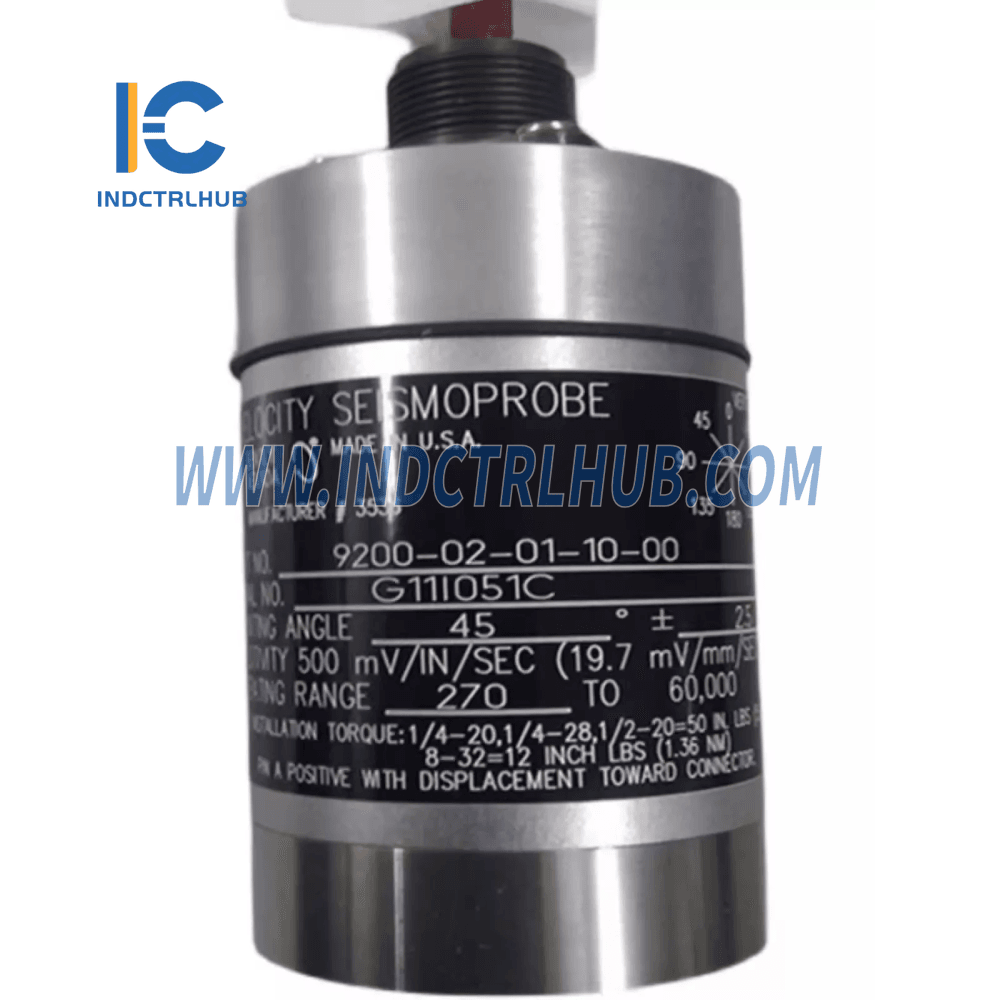
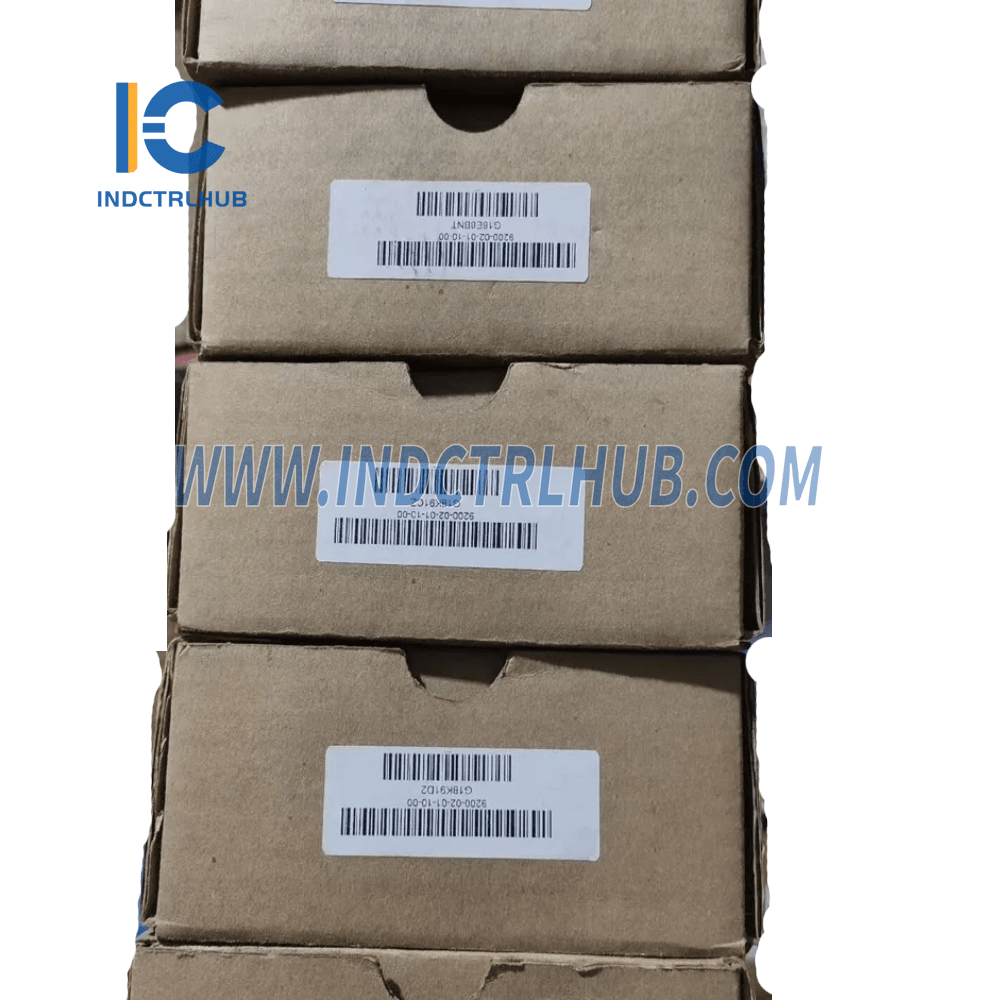
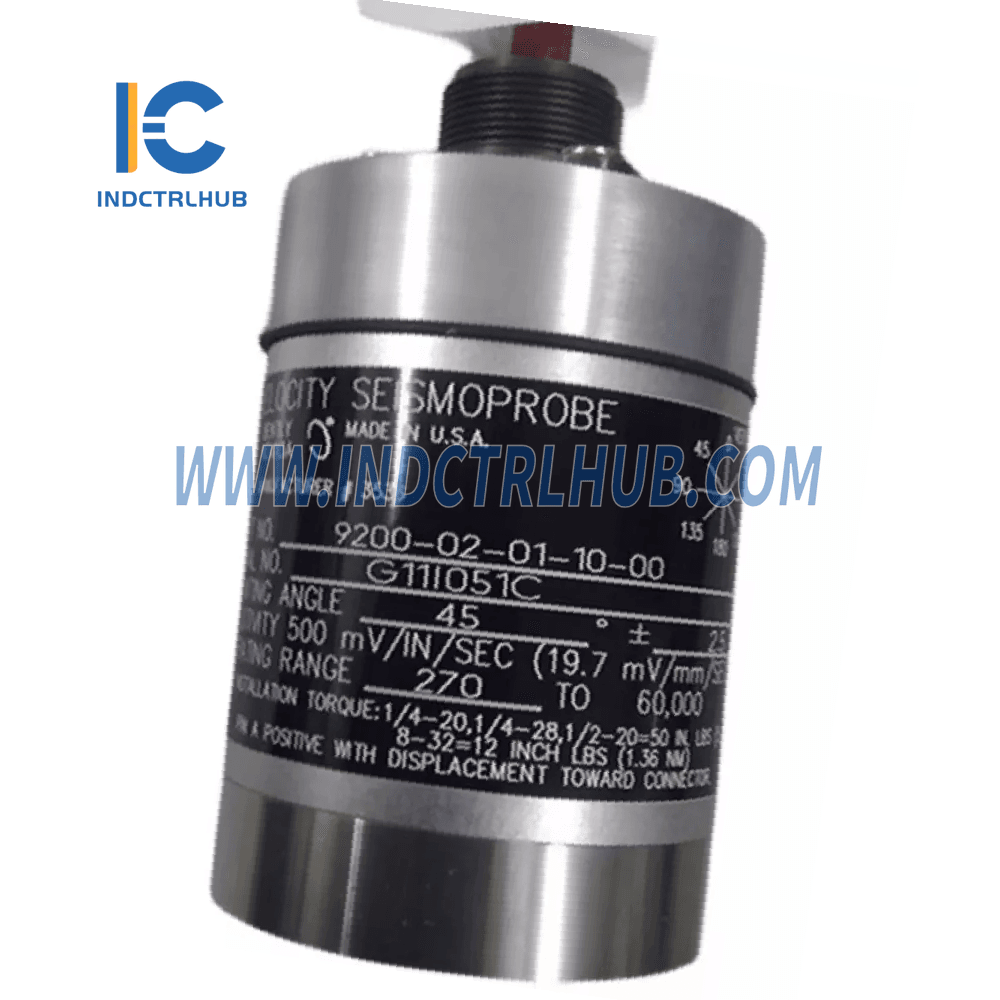
Bently Nevada 9200-02-01-10-00 Seismoprobe Velocity Transducer
Bently Nevada 9200-02-01-10-00 Seismoprobe Velocity Transducer
Manufacturer: Bently Nevada
Product No.: 9200-02-01-10-00
Condition:1000 in stock
Product Type: Velocity Transducer
Product Origin: 8509200020110
Payment: T/T, Western Union
Weight: 297g
Shipping port: Xiamen
Warranty: 12 months
- 24/7 Support
- 30-Day Returns
- Fast Shipping
Bently Nevada 9200-02-01-10-00 Seismoprobe Velocity Transducer
The Bently Nevada 9200-02-01-10-00 is a precision two-wire velocity transducer from the renowned 9200 Seismoprobe series, engineered to deliver accurate seismic vibration measurements in industrial rotating machinery applications. This self-generating sensor converts mechanical vibration into proportional electrical signals without requiring external power, making it ideal for continuous machinery health monitoring in harsh environments.
Core Technical Specifications
- Model Number: 9200-02-01-10-00
- Sensitivity: 100 mV/mm/s (nominal at 80 Hz)
- Frequency Response: 10 to 1000 Hz (±3 dB)
- Transduction Principle: Moving coil velocity sensor (self-generating)
- Electrical Connection: Two-wire configuration
- Mounting Thread: 1/4-28 UNF-2A
- Operating Temperature: -51°C to +121°C (-60°F to +250°F)
- Sealing: Hermetically sealed, IP67 environmental protection
- Case Material: Stainless steel 316L for corrosion resistance
- Weight: Approximately 297 grams
- Cable Options: Standard or fluid-resistant jacketed cable available
Self-Generating Technology Advantages
Unlike accelerometers requiring external power, the 9200-02-01-10-00 employs a moving coil design that generates its own electrical signal proportional to vibration velocity:
- Intrinsic Safety: No external power eliminates spark risk in hazardous areas, suitable for Zone 1/Division 1 installations with appropriate barriers
- Simplified Wiring: Two-wire design reduces installation complexity and cable costs by up to 40% compared to four-wire systems
- High Reliability: Passive sensing element has no active electronics to fail, delivering MTBF exceeding 200,000 hours
- Direct Velocity Output: Measures velocity directly without mathematical integration, providing true RMS vibration data
- Low Maintenance: Self-contained design requires no calibration or power supply maintenance
Industrial Application Scenarios
The 9200-02-01-10-00 velocity transducer excels in monitoring low-to-medium speed rotating equipment:
- Electric Motors: Continuous monitoring of induction motors from 600 to 3600 RPM in pumps, fans, and compressor drives to detect bearing wear, unbalance, and misalignment
- Centrifugal Pumps: Process pumps in chemical, water treatment, and oil refining facilities where cavitation and impeller damage must be detected early
- Cooling Tower Fans: Large HVAC and power plant cooling systems requiring vibration surveillance to prevent catastrophic blade failure
- Gearboxes: Industrial gear reducers where tooth wear and lubrication degradation manifest as increased vibration in the 10-1000 Hz range
- Blowers and Compressors: Rotary lobe blowers and screw compressors in pneumatic conveying and wastewater aeration systems
- Paper Machine Rolls: Dryer cans, press rolls, and calendar stacks where bearing condition directly impacts product quality
Predictive Maintenance Solutions
Integrating the 9200-02-01-10-00 into condition monitoring programs delivers measurable operational benefits:
- Early Fault Detection: Identifies bearing defects 4-8 weeks before failure, enabling planned maintenance during scheduled outages
- Reduced Downtime: Predictive replacement strategies cut unplanned shutdowns by 55-70% compared to reactive maintenance
- Extended Equipment Life: Continuous monitoring prevents secondary damage, increasing bearing life by 30-50%
- Energy Efficiency: Detects misalignment and unbalance conditions that increase power consumption by 5-15%
- Safety Enhancement: Prevents catastrophic failures that could endanger personnel or cause environmental releases
System Integration & Compatibility
The 9200-02-01-10-00 interfaces seamlessly with Bently Nevada monitoring infrastructure:
- Direct connection to Bently Nevada 3500 rack-based monitoring systems via 3500/50 Tachometer modules configured for velocity input
- Compatible with 3300 XL proximity system racks when used with appropriate signal conditioning
- Integrates with ADAPT (Advanced Data Analysis and Predictive Technology) software for trending and diagnostics
- Supports 4-20 mA transmitter interfaces for PLC and DCS integration in process control systems
- Works with portable vibration analyzers for route-based monitoring programs
Installation Guidelines & Best Practices
Proper installation is critical for accurate vibration measurement:
- Mounting Location: Install on bearing housing or structural component with direct mechanical path to bearing; avoid flexible mounts or sheet metal surfaces
- Surface Preparation: Machine flat mounting surface with maximum 63 microinch finish; remove paint, rust, and contamination
- Mounting Torque: Tighten to 5-7 ft-lbs (7-9 Nm) using calibrated torque wrench; over-torque damages internal suspension
- Orientation: Mount with cable exit pointing downward or horizontal to prevent moisture ingress
- Cable Routing: Secure cable every 12 inches; avoid sharp bends (minimum 2-inch radius) and proximity to power cables (maintain 6-inch separation)
- Grounding: Connect cable shield to earth ground at monitoring system end only to prevent ground loops
Troubleshooting & Diagnostics
Common issues and resolution procedures:
- Low Output Signal: Verify mounting torque and surface flatness; check for internal coil damage using resistance measurement (should read 500-700 ohms)
- Erratic Readings: Inspect cable for damage or moisture penetration; confirm proper grounding and shield continuity
- Frequency Response Shift: May indicate internal suspension damage from shock or over-torque; replace transducer if response deviates >5 dB from specification
- Temperature Sensitivity: Verify operating temperature within -51°C to +121°C range; consider heat shield if bearing housing exceeds limits
Quality Assurance & Certification
Each 9200-02-01-10-00 transducer undergoes comprehensive factory testing:
- Individual frequency response calibration with NIST-traceable reference standards
- Temperature cycling verification from -60°C to +130°C
- Hermetic seal leak testing to 1×10⁻⁸ cc/sec helium
- Shock and vibration qualification per MIL-STD-810
- Serialized calibration certificate documenting sensitivity and frequency response
Related Products
| Product | Description | Link |
|---|---|---|
| 9200-01-05-10-00 | Bently Nevada 9200 Seismoprobe Velocity Sensor, 50 mV/mm/s | View Product |
| 3500/50 | Bently Nevada 3500 Series Tachometer Module for velocity input | View Product |
| 330180-91-CN | Bently Nevada 3300 XL Proximitor Sensor for shaft displacement | View Product |
© 2025 INDUSTRIAL CONTROL HUB. All rights reserved.
Original Source: https://www.indctrlhub.com
Contact: sales@indctrlhub.com | +0086 18359243191
Product Description
Bently Nevada 9200-02-01-10-00 Seismoprobe Velocity Transducer
The Bently Nevada 9200-02-01-10-00 is a precision two-wire velocity transducer from the renowned 9200 Seismoprobe series, engineered to deliver accurate seismic vibration measurements in industrial rotating machinery applications. This self-generating sensor converts mechanical vibration into proportional electrical signals without requiring external power, making it ideal for continuous machinery health monitoring in harsh environments.
Core Technical Specifications
- Model Number: 9200-02-01-10-00
- Sensitivity: 100 mV/mm/s (nominal at 80 Hz)
- Frequency Response: 10 to 1000 Hz (±3 dB)
- Transduction Principle: Moving coil velocity sensor (self-generating)
- Electrical Connection: Two-wire configuration
- Mounting Thread: 1/4-28 UNF-2A
- Operating Temperature: -51°C to +121°C (-60°F to +250°F)
- Sealing: Hermetically sealed, IP67 environmental protection
- Case Material: Stainless steel 316L for corrosion resistance
- Weight: Approximately 297 grams
- Cable Options: Standard or fluid-resistant jacketed cable available
Self-Generating Technology Advantages
Unlike accelerometers requiring external power, the 9200-02-01-10-00 employs a moving coil design that generates its own electrical signal proportional to vibration velocity:
- Intrinsic Safety: No external power eliminates spark risk in hazardous areas, suitable for Zone 1/Division 1 installations with appropriate barriers
- Simplified Wiring: Two-wire design reduces installation complexity and cable costs by up to 40% compared to four-wire systems
- High Reliability: Passive sensing element has no active electronics to fail, delivering MTBF exceeding 200,000 hours
- Direct Velocity Output: Measures velocity directly without mathematical integration, providing true RMS vibration data
- Low Maintenance: Self-contained design requires no calibration or power supply maintenance
Industrial Application Scenarios
The 9200-02-01-10-00 velocity transducer excels in monitoring low-to-medium speed rotating equipment:
- Electric Motors: Continuous monitoring of induction motors from 600 to 3600 RPM in pumps, fans, and compressor drives to detect bearing wear, unbalance, and misalignment
- Centrifugal Pumps: Process pumps in chemical, water treatment, and oil refining facilities where cavitation and impeller damage must be detected early
- Cooling Tower Fans: Large HVAC and power plant cooling systems requiring vibration surveillance to prevent catastrophic blade failure
- Gearboxes: Industrial gear reducers where tooth wear and lubrication degradation manifest as increased vibration in the 10-1000 Hz range
- Blowers and Compressors: Rotary lobe blowers and screw compressors in pneumatic conveying and wastewater aeration systems
- Paper Machine Rolls: Dryer cans, press rolls, and calendar stacks where bearing condition directly impacts product quality
Predictive Maintenance Solutions
Integrating the 9200-02-01-10-00 into condition monitoring programs delivers measurable operational benefits:
- Early Fault Detection: Identifies bearing defects 4-8 weeks before failure, enabling planned maintenance during scheduled outages
- Reduced Downtime: Predictive replacement strategies cut unplanned shutdowns by 55-70% compared to reactive maintenance
- Extended Equipment Life: Continuous monitoring prevents secondary damage, increasing bearing life by 30-50%
- Energy Efficiency: Detects misalignment and unbalance conditions that increase power consumption by 5-15%
- Safety Enhancement: Prevents catastrophic failures that could endanger personnel or cause environmental releases
System Integration & Compatibility
The 9200-02-01-10-00 interfaces seamlessly with Bently Nevada monitoring infrastructure:
- Direct connection to Bently Nevada 3500 rack-based monitoring systems via 3500/50 Tachometer modules configured for velocity input
- Compatible with 3300 XL proximity system racks when used with appropriate signal conditioning
- Integrates with ADAPT (Advanced Data Analysis and Predictive Technology) software for trending and diagnostics
- Supports 4-20 mA transmitter interfaces for PLC and DCS integration in process control systems
- Works with portable vibration analyzers for route-based monitoring programs
Installation Guidelines & Best Practices
Proper installation is critical for accurate vibration measurement:
- Mounting Location: Install on bearing housing or structural component with direct mechanical path to bearing; avoid flexible mounts or sheet metal surfaces
- Surface Preparation: Machine flat mounting surface with maximum 63 microinch finish; remove paint, rust, and contamination
- Mounting Torque: Tighten to 5-7 ft-lbs (7-9 Nm) using calibrated torque wrench; over-torque damages internal suspension
- Orientation: Mount with cable exit pointing downward or horizontal to prevent moisture ingress
- Cable Routing: Secure cable every 12 inches; avoid sharp bends (minimum 2-inch radius) and proximity to power cables (maintain 6-inch separation)
- Grounding: Connect cable shield to earth ground at monitoring system end only to prevent ground loops
Troubleshooting & Diagnostics
Common issues and resolution procedures:
- Low Output Signal: Verify mounting torque and surface flatness; check for internal coil damage using resistance measurement (should read 500-700 ohms)
- Erratic Readings: Inspect cable for damage or moisture penetration; confirm proper grounding and shield continuity
- Frequency Response Shift: May indicate internal suspension damage from shock or over-torque; replace transducer if response deviates >5 dB from specification
- Temperature Sensitivity: Verify operating temperature within -51°C to +121°C range; consider heat shield if bearing housing exceeds limits
Quality Assurance & Certification
Each 9200-02-01-10-00 transducer undergoes comprehensive factory testing:
- Individual frequency response calibration with NIST-traceable reference standards
- Temperature cycling verification from -60°C to +130°C
- Hermetic seal leak testing to 1×10⁻⁸ cc/sec helium
- Shock and vibration qualification per MIL-STD-810
- Serialized calibration certificate documenting sensitivity and frequency response
Related Products
| Product | Description | Link |
|---|---|---|
| 9200-01-05-10-00 | Bently Nevada 9200 Seismoprobe Velocity Sensor, 50 mV/mm/s | View Product |
| 3500/50 | Bently Nevada 3500 Series Tachometer Module for velocity input | View Product |
| 330180-91-CN | Bently Nevada 3300 XL Proximitor Sensor for shaft displacement | View Product |
© 2025 INDUSTRIAL CONTROL HUB. All rights reserved.
Original Source: https://www.indctrlhub.com
Contact: sales@indctrlhub.com | +0086 18359243191