


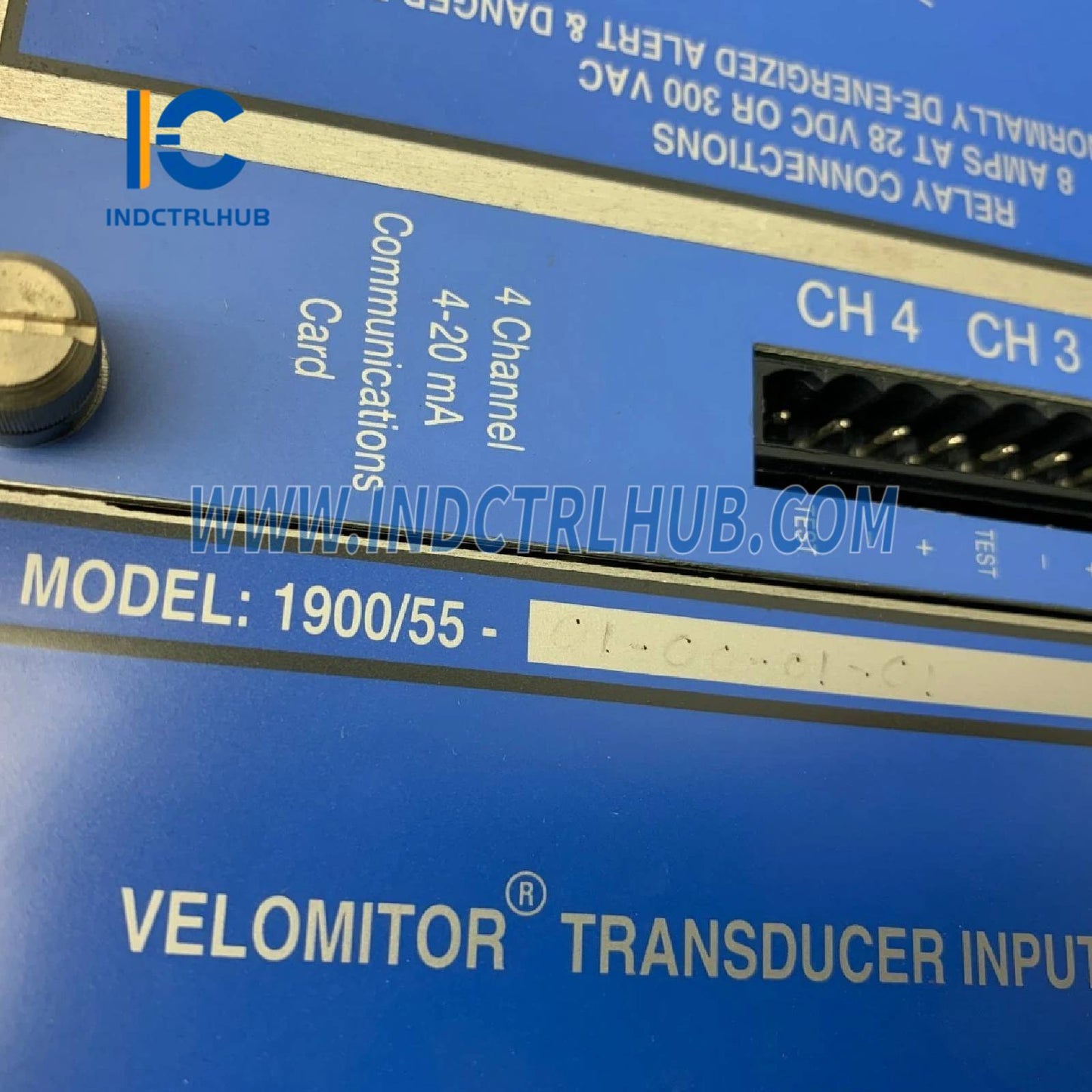
Bently Nevada 1900/55-01-00-01-01 Proximity Sensor System
Bently Nevada 1900/55-01-00-01-01 Proximity Sensor System
Manufacturer: Bently Nevada
Product No.: 1900/55-01-00-01-01
Condition:1000 in stock
Product Type: Proximity Sensors
Product Origin: 001900550100
Payment: T/T, Western Union
Weight: 200g
Shipping port: Xiamen
Warranty: 12 months
- 24/7 Support
- 30-Day Returns
- Fast Shipping
Bently Nevada 1900/55-01-00-01-01 Proximity Sensor System
The Bently Nevada 1900/55-01-00-01-01 is a high-precision proximity sensor system designed for continuous vibration and position monitoring in rotating machinery. This industrial-grade sensor delivers reliable shaft displacement measurements in turbines, compressors, and motors, enabling predictive maintenance programs that prevent costly unplanned downtime.
Key Features
- ✅ Non-Contact Measurement – Eddy current technology monitors shaft position without physical contact
- ✅ High Accuracy – Precision measurement for critical machinery protection
- ✅ Wide Frequency Range – DC to 10 kHz response captures slow roll and vibration
- ✅ Industrial Durability – Operates reliably in harsh environments
- ✅ API 670 Compliant – Meets industry standards for machinery protection systems
Technical Specifications
| Part Number | 1900/55-01-00-01-01 |
| System Type | Proximity Sensor System |
| Measurement Type | Eddy current proximity |
| Frequency Response | DC to 10 kHz (-3dB) |
| Operating Temp | -40°C to +177°C (-40°F to +350°F) |
| Certifications | API 670, CE, UL |
| Housing Material | Stainless steel (corrosion resistant) |
| Weight | 0.2 kg |
Industrial Applications
Turbomachinery Monitoring
Monitor journal bearing clearance, thrust position, and rotor vibration in steam turbines, gas turbines, and centrifugal compressors.
Large Motors & Generators
Track rotor position and vibration in electric motors above 1,000 HP. Prevent bearing failures and rotor-to-stator contact.
Process Pumps & Compressors
Measure shaft displacement and vibration in oil & gas applications. API 670 compliance required for machinery protection systems.
Predictive Maintenance
Enable condition-based maintenance strategies that reduce emergency repairs by 40-60% and extend equipment life.
Installation Guidelines
Best Practices
- Gap Setting – Install with 1.0-1.5mm (40-60 mils) gap to shaft surface
- Perpendicular Alignment – Probe tip must be perpendicular to shaft (±5° tolerance)
- Target Surface – Ensure smooth, clean shaft surface free of keyways or scratches
- Cable Routing – Avoid sharp bends, keep away from power lines (300mm minimum)
- Grounding – Ground cable shield at proximitor end only
Authenticity Guarantee
⚠️ Counterfeit Sensor Risks
Non-genuine proximity sensors can cause:
- ❌ Inaccurate measurements leading to missed faults
- ❌ Premature failure in high-temperature environments
- ❌ Non-compliance with API 670 standards
- ❌ Voided machinery protection system certifications
✅ Industrial Control Hub Guarantee
- 🔒 100% Genuine Bently Nevada – Factory-sealed packaging
- 📜 Calibration Certificate – Includes sensitivity and linearity data
- 🌍 Authorized Distributor – Verify at Baker Hughes partner portal
- 🛡️ 24-Month Warranty – Manufacturer warranty honored globally
Package Contents
- 1× Bently Nevada 1900/55-01-00-01-01 proximity sensor system
- Installation hardware and mounting accessories
- Product documentation and calibration certificate
Technical Support
- 📧 Application Engineering – Email us for sensor selection and placement guidance
- 📚 Documentation – Installation manuals, API 670 guides, calibration procedures
- 🔧 Commissioning Support – Remote assistance for setup and verification
- 🔄 30-Day Returns – Unused sensors in original packaging
FAQ
Q: What is the difference between proximity sensors and accelerometers?
A: Proximity sensors measure shaft displacement (absolute position), while accelerometers measure vibration. Both are complementary.
Q: Can I use this sensor with non-steel shafts?
A: Sensor requires conductive target material (steel, stainless steel, Inconel). Not compatible with ceramic or composite shafts.
Q: How often should I recalibrate?
A: API 670 recommends recalibration every 5 years or after cable replacement. Annual field verification recommended.


Product Description
Bently Nevada 1900/55-01-00-01-01 Proximity Sensor System
The Bently Nevada 1900/55-01-00-01-01 is a high-precision proximity sensor system designed for continuous vibration and position monitoring in rotating machinery. This industrial-grade sensor delivers reliable shaft displacement measurements in turbines, compressors, and motors, enabling predictive maintenance programs that prevent costly unplanned downtime.
Key Features
- ✅ Non-Contact Measurement – Eddy current technology monitors shaft position without physical contact
- ✅ High Accuracy – Precision measurement for critical machinery protection
- ✅ Wide Frequency Range – DC to 10 kHz response captures slow roll and vibration
- ✅ Industrial Durability – Operates reliably in harsh environments
- ✅ API 670 Compliant – Meets industry standards for machinery protection systems
Technical Specifications
| Part Number | 1900/55-01-00-01-01 |
| System Type | Proximity Sensor System |
| Measurement Type | Eddy current proximity |
| Frequency Response | DC to 10 kHz (-3dB) |
| Operating Temp | -40°C to +177°C (-40°F to +350°F) |
| Certifications | API 670, CE, UL |
| Housing Material | Stainless steel (corrosion resistant) |
| Weight | 0.2 kg |
Industrial Applications
Turbomachinery Monitoring
Monitor journal bearing clearance, thrust position, and rotor vibration in steam turbines, gas turbines, and centrifugal compressors.
Large Motors & Generators
Track rotor position and vibration in electric motors above 1,000 HP. Prevent bearing failures and rotor-to-stator contact.
Process Pumps & Compressors
Measure shaft displacement and vibration in oil & gas applications. API 670 compliance required for machinery protection systems.
Predictive Maintenance
Enable condition-based maintenance strategies that reduce emergency repairs by 40-60% and extend equipment life.
Installation Guidelines
Best Practices
- Gap Setting – Install with 1.0-1.5mm (40-60 mils) gap to shaft surface
- Perpendicular Alignment – Probe tip must be perpendicular to shaft (±5° tolerance)
- Target Surface – Ensure smooth, clean shaft surface free of keyways or scratches
- Cable Routing – Avoid sharp bends, keep away from power lines (300mm minimum)
- Grounding – Ground cable shield at proximitor end only
Authenticity Guarantee
⚠️ Counterfeit Sensor Risks
Non-genuine proximity sensors can cause:
- ❌ Inaccurate measurements leading to missed faults
- ❌ Premature failure in high-temperature environments
- ❌ Non-compliance with API 670 standards
- ❌ Voided machinery protection system certifications
✅ Industrial Control Hub Guarantee
- 🔒 100% Genuine Bently Nevada – Factory-sealed packaging
- 📜 Calibration Certificate – Includes sensitivity and linearity data
- 🌍 Authorized Distributor – Verify at Baker Hughes partner portal
- 🛡️ 24-Month Warranty – Manufacturer warranty honored globally
Package Contents
- 1× Bently Nevada 1900/55-01-00-01-01 proximity sensor system
- Installation hardware and mounting accessories
- Product documentation and calibration certificate
Technical Support
- 📧 Application Engineering – Email us for sensor selection and placement guidance
- 📚 Documentation – Installation manuals, API 670 guides, calibration procedures
- 🔧 Commissioning Support – Remote assistance for setup and verification
- 🔄 30-Day Returns – Unused sensors in original packaging
FAQ
Q: What is the difference between proximity sensors and accelerometers?
A: Proximity sensors measure shaft displacement (absolute position), while accelerometers measure vibration. Both are complementary.
Q: Can I use this sensor with non-steel shafts?
A: Sensor requires conductive target material (steel, stainless steel, Inconel). Not compatible with ceramic or composite shafts.
Q: How often should I recalibrate?
A: API 670 recommends recalibration every 5 years or after cable replacement. Annual field verification recommended.